Tonk 12: Tunk Rummy ZingPlay
- 4.4
- Rating
- 100.00K
- Installs
- Free
- Price
 Analysis by App-foxy
I approached Tonk 12: Tunk Rummy ZingPlay as a quick card game for people who want a focused round rather than a large, feature-heavy mobile package. It comes from VNG ZingPlay Studio, is free to install, and sits in the card-game category with a Teen content rating. The basic appeal is easy to understand: open the game when you have a spare moment, play Tonk 12, and leave when the round is over.
That simplicity is also what makes it worth judging carefully. A card game does not need demanding graphics to feel slow, nor does a small download automatically mean it will behave perfectly on every phone. In my experience, the important questions here are whether the game gets you into a match without unnecessary friction, whether busy play feels manageable, and whether the app suits your preferred style of card gaming. My overall impression is positive, but it is aimed at a particular player: someone who enjoys compact, competitive card sessions more than a broad collection of casino-style distractions.
How Tonk 12 feels during ordinary play
I find the ordinary rhythm of Tonk 12 easiest to judge when I treat each round as a small decision-making session, not just a way to fill a spare minute. A useful habit is to pause after a surprising result and consider whether the choice or the changing hand shaped it; that reflection makes repeat play more rewarding. From there, the next question is what keeps the loop inviting rather than repetitive.
You May Also Like

 Pandora - Music & Podcasts
Pandora’s Music Is Easy to Start, but Harder to Recover
Pandora’s strength is its low-effort path from a seed to a station. Its weak spot is how much confidence it asks you to place in connection, setup, and quiet recovery.

 8 Ball Pool
 Is Built on Rivalries, Rematches, and Routine
A close look at the rivalries, rematches, shared routines, and unanswered safety questions that turn a quick pool match into a persistent mobile community.

 Samsung Music
’s Quiet Strength Is Playing What You Already Own
Its reach comes less from spectacle than from dependable access to a personal library. That simplicity is both the app’s strongest retention engine and its ceiling.

 AccuWeather: Weather Radar
AccuWeather Review: A Quick, Clear Forecast for Everyday Decisions
For everyday plans, the best forecast is the one you can understand quickly. AccuWeather makes rain timing, radar, and local conditions easy to act on, with a few trade-offs.

 Hill Climb Racing
Why Hill Climb Racing Still Turns Crashes Into One More Run
A tiny car, a bumpy hill and one more upgrade: Hill Climb Racing keeps resurfacing because its simple chaos makes every near-miss feel personal.

 AliExpress - Shopping App
AliExpress Makes Global Shopping Feel Personal, but Shoppers Bear the Risk
AliExpress turns a global marketplace into a pocket-sized discovery engine. Its reach is useful, its shopping loop compelling, and its trade-offs easy to miss.
More From Our News Desk
View All News


A naturally quick format for short sessions
The strongest performance expectation for this game comes from its format. Tonk is built around decisions involving cards, so the action should feel more immediate than a game that constantly loads large environments, animated maps, or complex visual scenes. When I think about using it during a break, on a commute, or while waiting for an appointment, the attraction is not an elaborate presentation. It is the possibility of starting a round, concentrating for a while, and finishing without committing to a long campaign.
That makes the game a better fit for short, repeatable sessions than for players looking for a deep role-playing progression system. The card table is the center of attention, and that helps keep the mental workload on the hand in front of me instead of on menus, upgrades, or exploration. If you already understand Tonk, that directness should feel comfortable. If you are new to it, the first few rounds may be less about speed and more about learning which decisions matter.
The title is listed as Tonk 12, and that name is useful to keep in mind when searching for it or discussing it with friends. It is not presented as a general-purpose rummy collection. I would choose it when I specifically wanted this style of card play, not when I wanted several unrelated card games in one app.
Where the pace depends on the player
A fast card game is not automatically a frantic one. The perceived speed depends on how quickly I recognize useful combinations, judge a discard, and decide whether to push or protect a promising hand. That means experienced players may find the flow brisk, while newcomers can experience the same rounds as thoughtful and occasionally slow. I see that as a normal learning curve rather than a performance problem.
One practical tip is to treat the opening rounds as observation time. Instead of trying to play every turn as quickly as possible, I would watch how the hand develops and notice which cards remain useful after a draw. This reduces rushed decisions and makes the game feel more consistent. It also helps separate two different frustrations: a genuinely delayed response from the app and a pause caused by thinking through the cards.
The free entry point is helpful here. I can try the game without paying first, learn whether its rhythm suits me, and decide later whether optional spending has any value for my own habits. The listed in-app purchase range runs from $0.99 to $199.99 per item, so I would be especially careful with purchase controls if the device is shared with younger family members. The Teen rating is another reason to treat it as a game for an older audience rather than assuming it is designed for children.
What heavier use may feel like
The most demanding moments are likely to come from repeated sessions rather than from any single card action. Playing round after round can make small delays, interface habits, or unclear decisions more noticeable. A game that feels perfectly comfortable for ten minutes may feel less polished after a long evening because I am paying attention to every transition and every pause.
For that reason, I would judge the app in two ways. First, I would play a single round to see whether the basic flow makes sense. Then I would try several sessions with short breaks, because that reveals whether the experience remains comfortable when the game becomes a routine rather than a one-time test. This is also where device heat, battery use, and background interruptions become more relevant, although those results can vary widely between phones and should not be treated as universal characteristics of the game.
My practical approach is to close other demanding apps before a long card session, keep the phone reasonably charged, and avoid judging the game during a moment when the device itself is already overloaded. These habits are not special tricks for Tonk 12; they are simply a sensible way to distinguish a card game's own behavior from problems caused by an overworked phone.
Stability and recovering from interruptions
Reliability matters more in a competitive card game than it first appears. A brief interruption can cause me to lose track of the hand, miss a turn, or wonder whether the last action actually registered. I therefore pay attention not only to how quickly a game opens, but also to how understandable it feels after I switch away and return.
The safest expectation is to treat a round as something that deserves uninterrupted attention. If a call, notification, or low-memory condition forces the app into the background, I would return promptly and check the visible game state before making another move. That small pause is worthwhile because it prevents a mistaken tap based on an incomplete screen refresh.
I also recommend keeping the app updated when a newer version is offered. The current version is 1.9, and using the current release is generally the sensible starting point for anyone evaluating stability. Updates can change how an app handles devices and interruptions, so I would not rely on an old installation when deciding whether the experience is dependable today.
Recovery is especially important for players who use the game in short bursts. If you open it between errands, you may be more likely to switch apps quickly or lock the screen without thinking. I would avoid beginning a round when I know I will be interrupted immediately. Tonk rewards attention, and a rushed session can feel unreliable even when the underlying app is behaving normally.
Device limits and everyday practicality
The minimum operating-system requirement is Android 8.0, which gives the game a reasonably clear starting point for compatibility. That does not guarantee identical behavior on every supported phone. Older hardware can differ in memory, screen response, battery condition, and background management, so two devices running the same operating-system generation may still provide different experiences.
On a newer phone, I would expect a card-focused game to be easier to live with than a visually intensive title, particularly when the device is used mainly for ordinary tasks. On an older phone, I would pay more attention to startup time, keyboard or touch responsiveness if any text input appears, and whether returning from another app feels smooth. These are the areas where a modest game can still expose the limits of aging hardware.
Screen size is another practical consideration. Card layouts need to remain readable, and a compact display may require more concentration than a larger one. I would not choose this game solely because it is free if I regularly struggle to distinguish cards or controls on my phone. A comfortable viewing angle and responsive touch screen can matter more to the experience than raw processing power.
Storage and battery expectations should also be realistic. I would not assume that a card game has no resource cost simply because its subject is simple. Repeated online activity, background services, animations, or inefficient behavior can affect a device, but those effects depend on the handset and network conditions. My advice is to watch how your own phone behaves during a normal session instead of trusting a blanket claim that the game is either extremely light or unusually demanding.
How it compares with familiar card-game alternatives
Compared with a traditional physical deck, Tonk 12 removes the need to find opponents, shuffle cards, and track the table manually. That convenience is its clearest advantage. I can play when nobody nearby is interested in a card game, and the app can handle the basic structure while I focus on decisions.
Compared with broad card-game apps that bundle solitaire, poker, rummy variants, and other modes, this title appears more focused. That focus is useful if Tonk is exactly what I want. It is less useful if I expect a single installation to provide a different game for every mood. Players who enjoy collecting many modes may prefer a wider card suite, while players who dislike clutter may appreciate a narrower purpose.
It also differs from a purely offline deck of cards. A physical deck is dependable when a phone battery is low and is naturally social around a table. This app is more convenient for solo access to a digital match, but it still depends on the phone being available and in a suitable condition. I would pick the physical alternative for a family gathering and this game for a personal break when I want the rules and hand management presented digitally.
Another trade-off involves spending. The game itself is free, but optional purchases can reach a high price per item. That does not make the app unsuitable, yet it means I would not treat every visible purchase as part of the core value. I would first decide whether the free experience is enjoyable on its own, then set a firm budget if I choose to buy anything. For many players, the best use of the app may be to enjoy the card play without adding spending pressure.
Who will get the most from it
I would recommend Tonk 12 to someone who already likes rummy-family card games and wants a mobile version that can fit into small gaps in the day. It is also a reasonable choice for a player who prefers thinking through a hand over steering a character, collecting equipment, or learning a large set of unrelated systems. The Teen rating makes it more appropriate for older players than for children, and the free price makes testing the basic experience straightforward.
A realistic use case would be a player taking a lunch break with ten or fifteen minutes available. I would open the game, play a focused round, and stop before returning to work. Another good situation is a quiet evening when I want competition without the commitment of a long multiplayer session. The game can also serve as a way to practice recognizing card relationships, provided I am willing to learn at a measured pace rather than expecting instant mastery.
I would skip it if my main goal is a large variety of card modes, a rich offline experience, or a social tabletop game with friends sitting beside me. I would also be cautious if I dislike optional purchases appearing in free games, even when I can choose not to use them. Someone who wants a completely distraction-free deck of cards may be happier with a simpler offline alternative, while someone seeking dramatic visuals should look elsewhere in the games category.
Small habits that improve the experience
My first useful habit is to separate learning from winning. During the first few sessions, I would concentrate on understanding the flow of Tonk 12 and reviewing why a discard helped or hurt the hand. That is more productive than judging the entire app by an early losing streak. Card games often feel unfair when the real issue is unfamiliar decision-making.
Second, I would play in a stable setting whenever possible. A reliable connection, a charged device, and a few uninterrupted minutes make it easier to tell whether I actually enjoy the game. If I test it while moving between apps, receiving constant notifications, or using a phone that is already struggling, I may blame the game for a poor session that was really caused by the circumstances.
Third, I would set a spending boundary before exploring optional purchases. Because individual items range from $0.99 to $199.99, a clear limit protects the free-to-try nature of the app. I would also make sure the purchase process is controlled on a shared device. This is not about assuming that spending is necessary; it is about keeping the decision deliberate.
Finally, I would use the current release and restart the app if an interruption leaves the table looking uncertain. That simple recovery routine is more useful than repeatedly tapping at a screen that may still be updating. It also gives me a fairer impression of reliability over several sessions.
My performance verdict
VNG ZingPlay Studio has made a focused card game that is easiest to appreciate when I want Tonk specifically, not a sprawling collection of mobile entertainment. The free price lowers the barrier to trying it, the Android 8.0 minimum keeps the compatibility target clear, and the game’s card-centered format should make short sessions more natural than in many larger titles. Its average rating is 4.4 from around 3.5 thousand ratings, while more than 100 thousand installations show that it has found a real audience.
Those figures do not replace personal testing, especially because speed, stability, and battery behavior can vary by device. My own recommendation is to begin with a few uninterrupted rounds, observe how the app behaves when you briefly leave it, and decide whether the focused Tonk format holds your attention. The best reason to install it is its direct, compact card-play identity; the main reason to skip it is wanting more variety or a fully offline tabletop feel.
In the end, I see Tonk 12 as a sensible choice for a specific kind of player rather than an all-purpose card recommendation. If you enjoy learning a hand, making quick but meaningful choices, and fitting a game into ordinary spare time, it is worth trying. If you need a broad card library, guaranteed comfort on very old hardware, or no purchase options at all, another alternative will probably serve you better.
FAQs for Tonk 12: Tunk Rummy ZingPlay
01What is Tonk 12: Tunk Rummy ZingPlay?
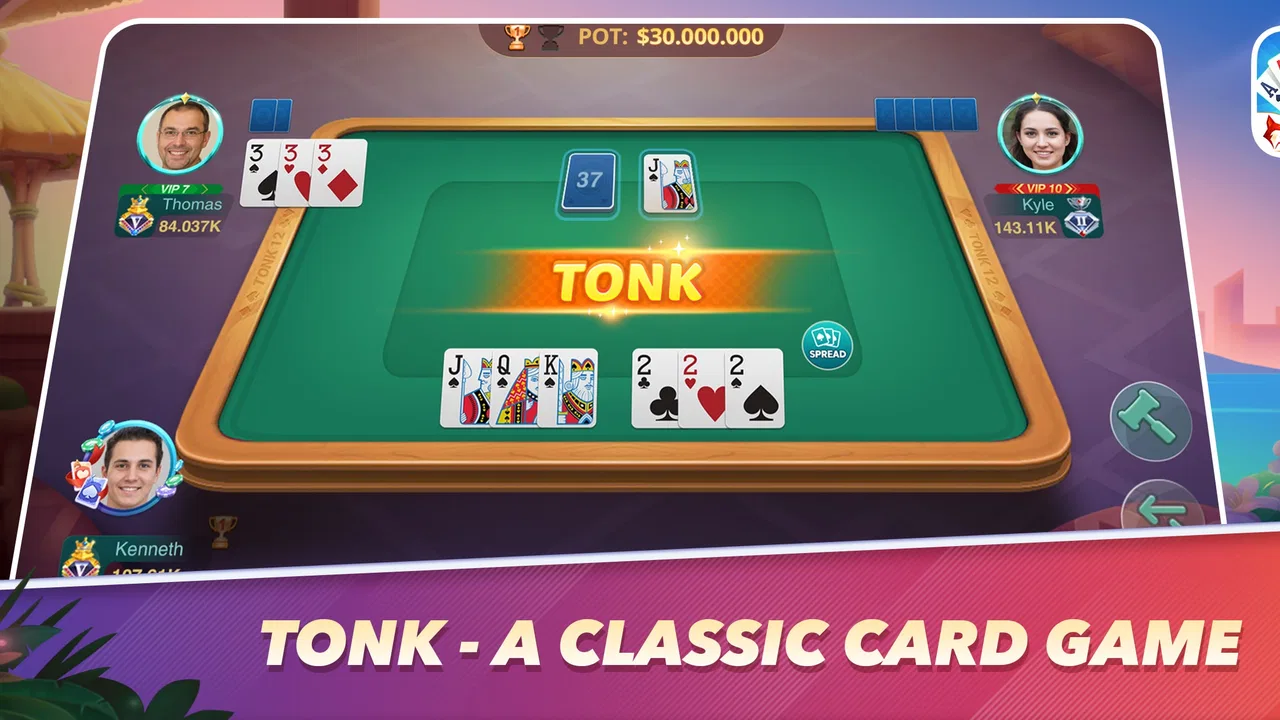
Tonk 12: Tunk Rummy ZingPlay is a mobile card game available on both Android and iOS platforms. It offers a digital version of the classic Tonk card game, allowing players to enjoy multiplayer sessions with friends or random opponents. The app is designed with intuitive controls and vibrant graphics, enhancing the overall gaming experience.
02Is Tonk 12: Tunk Rummy ZingPlay free to play?
Yes, Tonk 12: Tunk Rummy ZingPlay is free to download and play. However, it does offer in-app purchases that can enhance gameplay. These purchases include special features, card decks, and other premium content that can provide an advantage or add to the enjoyment of the game.
03Can I play Tonk 12: Tunk Rummy ZingPlay offline?
Tonk 12: Tunk Rummy ZingPlay primarily focuses on online multiplayer gameplay, so an internet connection is required to play with others. However, some modes may allow for offline play against AI opponents, providing a way to practice and improve your skills without needing a connection.
04What are the main features of Tonk 12: Tunk Rummy ZingPlay?
Tonk 12: Tunk Rummy ZingPlay features include real-time multiplayer matches, customizable card decks, and leaderboards to track your progress. The app also offers daily challenges and rewards, interactive tutorials for newcomers, and various game modes to keep the gameplay fresh and engaging for both new and veteran players.
05Is Tonk 12: Tunk Rummy ZingPlay suitable for all ages?
Tonk 12: Tunk Rummy ZingPlay is suitable for a wide range of ages, but primarily targets teens and adults due to its strategic gameplay and competitive nature. It’s important for parents to be aware of the in-app purchase options and ensure appropriate settings are in place to manage spending and online interactions.
Pros
- Intuitive interface that's easy to navigate.
- Smooth gameplay with minimal lag issues.
- Supports multiplayer mode for added fun.
- Engaging graphics enhance the experience.
- Free to play with optional in-app purchases.
Cons
- Requires a stable internet connection.
- Advertisements can be frequent and intrusive.
- Limited offline functionality.
- Occasional bugs in matchmaking.
- In-app purchases can be expensive.

Tonk 12: Tunk Rummy ZingPlay
Gallery